Chiklita ad
Showing posts with label Lifestyle. Show all posts
Tuesday, 20 February 2018
How gene shaped human face
Researchers from KU Leuven (Belgium) and the universities of Pittsburgh, Stanford, and Penn State (US) have identified fifteen genes that determine human facial features. Human DNA determines what an individual look like, including facial features. That appeals to the popular imagination, as the potential applications are obvious. Doctors could use DNA for skull and facial reconstructive surgery, forensic examiners could sketch a perpetrator's face on the basis of DNA retrieved from a crime scene, and historians would be able to reconstruct facial features using DNA from days long gone.
In a new study conducted by KU Leuven in collaboration with the universities of Pittsburgh, Stanford and Penn State, the researchers adopted a different approach. "Our search doesn't focus on specific traits," lead author Peter Claes (KU Leuven) explains. "My colleagues from Pittsburgh and Penn State each provided a database with 3D images of faces and the corresponding DNA of these people. Each face was automatically subdivided into smaller modules. Next, we examined whether any locations in the DNA matched these modules. This modular division technique made it possible for the first time to check for an unprecedented number of facial features."
The scientists were able to identify fifteen locations in human DNA. The Stanford team found out that genomic loci linked to these modular facial features are active when human face develops in the womb. "Furthermore, we also discovered that different genetic variants identified in the study are associated with regions of the genome that influence when, where and how much genes are expressed," says Joanna Wysocka (Stanford). Seven of the fifteen identified genes are linked to the nose, and that's good news, Peter Claes (KU Leuven) continues. "
A skull doesn't contain any traces of the nose, which only consists of soft tissue and cartilage. Therefore, when forensic scientists want to reconstruct a face on the basis of a skull, the nose is the main obstacle. If the skull also yields DNA, it would become much easier to determine the shape of the nose. Age, environment, and lifestyle have an impact on what human face looks like, this could provide genetic insight into the shape and functioning of human brain, as well as in neurodegenerative diseases such as Alzheimer's."
haleplushearty.blogspot.com
Thursday, 15 February 2018
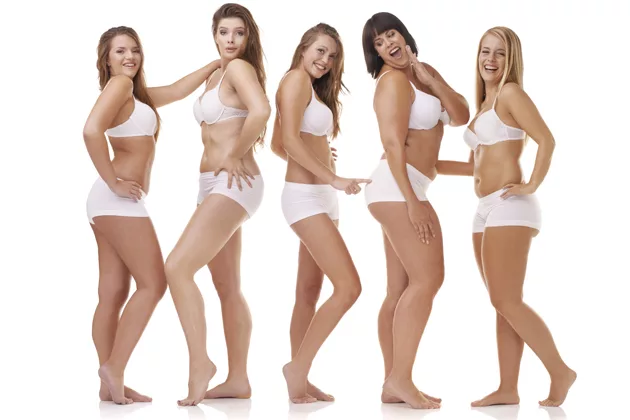
Hormonal imbalances can cause excess weight in different parts of the body
Latest research shows excess weight may gather in certain areas regardless of how much you diet or exercise, as a result of hormone imbalances. Lifestyle, diet and genetics play a part. Human bodies evolved to react to danger by producing the stress hormone cortisol, to trigger the release of energy for the ‘fight or flight’ response. Excess cortisol sparks the release of energy in the form of fat and glucose. This is redeposited as fat round the waist.
Eat little and often to keep blood sugar levels stable, as fluctuations can trigger cortisol release. Eat foods with a low glycemic load, such as apples, wholegrain bread or cashews, which slowly release energy. Too much oestrogen can cause fat to build in the buttocks and thighs. Those fat cells manufacture more oestrogen, and, in turn, more fat is stored. Drinking too much alcohol means the liver can’t clear oestrogen from the blood.
Fat ankles are often the result of fluid retention, which can be caused by a lack of progesterone. Progesterone acts as a diuretic, flushing excess liquid from the body. Bulging calves may be made worse by low levels of human growth hormone, which seems to prompt fat storage in the legs.
Foods rich in vitamin E may boost progesterone. These include sunflower seeds and peanut butter. Reduce sodium intake as this is key in regulating blood pressure and fluid levels, which can help with water retention in the legs and ankles. Avoid processed food such as ready meals. And to boost human growth hormone, get plenty of sleep-HGH is only released at night in adults.
A chubby face, as well as a flabby neck, could be down to too little thyroxine, a hormone produced by the thyroid gland. An underactive thyroid slows the metabolism, which may cause bloating. Another symptom is a swollen neck, called goitre, where the thyroid gland becomes a visible bump. Taking a supplement with selenium, which helps body use thyroxine more efficiently.
Human produces a hormone called DHEA (dehydroepiandrosterone), which is converted into testosterone-DHEA helps build lean muscle mass. When testosterone levels drop too low, muscle mass can be replaced with fat-this is noticeable on the upper arms, which have large muscles.
Women's testosterone levels drop with age, peaking in their 20s, then halving by menopause, but certain foods can help. Consume more protein, such as fish, eggs, tofu and nuts. Zinc, magnesium and vitamin B6 also promote testosterone production.
The rolls that hang over the back of your bra could be because of low levels of human growth hormone (HGH). During the night, women’s pituitary glands release human growth hormone, which stimulates fat cells to release energy to repair the body’s tissues. Too little HGH and fat cells don’t receive the message to convert fat into energy. Studies show adults who lack HGH often have a high level of body fat around the trunk, especially the back.
Melatonin-rich foods, such as raspberries, can increase HGH secretion by up to 157 per cent. Melatonin triggers the release of hormones that tell the body it’s time for sleep. Another study found foods high in the amino acid glutamine, such as yoghurt, can raise HGH production.
haleplushearty.blogspot.com
Tuesday, 5 December 2017
Fat distribution increases the risk of heart attack
It's not the amount of fat in the body but where it's stored that may increase the risk for heart attack, stroke and diabetes. People of the same weight or body mass index (BMI) may have different risk profiles, based on genetics, lifestyle and diet. In addition, body composition differs between men and women, with women having proportionately more fat and men having more muscle mass.
Fat distribution is an important determinant of cardiometabolic risk. There are different body shapes, common descriptors of human body shapes, based on where fat tends to be stored in the body. In apple-shaped bodies, fat is distributed largely around the midsection, while in pear-shaped bodies, fat is distributed lower around the hips and thighs. The type of fat stored also plays a role in cardiometabolic risk. One type of fat-ectopic fat-is dangerous. It may be found in places such as the abdominal region, muscles, liver and other organs.
There are gender-based differences in body composition and ectopic fat depots and that these could be associated with gender-specific risk profiles for diseases like diabetes, heart disease and stroke, researchers examined overweight and obese men and women wit the same BMI who were otherwise healthy. After fasting overnight, the study participants underwent dual-energy x-ray absorptiometry (DXA) and CT scans to determine body composition, as well as magnetic resonance spectroscopy (MRS) for fat quantification and analysis.
The results showed that the women had a higher percentage of fat and more subcutaneous (below-the-skin) fat but lower lean mass, compared to men. However, men had more visceral adipose tissue (VAT), or ectopic fat depots located in the abdomen around the internal organs known as a "beer belly", and more ectopic fat in the muscles and liver. Obese men have relatively higher visceral fat, fat within muscle cells and liver fat, which are all risk factors for cardiometabolic disease, compared to women with the same BMI. However, men have higher muscle and lean mass, which are protective for cardiometabolic health.
Women have a higher relative amount of total body fat and higher superficial thigh fat, which is protective for cardiometabolic health. Compared to women, men had higher measures of cardiometabolic risk overall, but ectopic fat was not significantly associated with cardiometabolic risk in men. Ectopic fat in women, however, was strongly associated with cardiometabolic risk measures. The detrimental fat depots deep in the belly, muscles and liver are more damaging for cardiometabolic health in women compared to men.
The researchers looked at the relationship between sarcopenic obesity-or the loss of skeletal lean muscle mass in the presence of obesity and its relationship to cardiometabolic risk. Many factors can lead to sarcopenic obesity in young adults, particularly obesity and lack of exercise. Growth hormone helps to build muscle mass. Nutrition also plays an important role, and too little intake of protein can lead to muscle loss. The researchers studied young, overweight and obese adults who were otherwise healthy.
Participants underwent DXA and CT scans and various metabolic tests. Results showed that having a lower lean muscle mass to BMI ratio was associated with cardiometabolic risk, and these effects were stronger in women than in men. Sarcopenic obesity may be an under-appreciated mechanism linking obesity to cardiometabolic disease.
haleplushearty.blogspot.com
Saturday, 18 November 2017
Effects of parents' lifestyle on their children
The importance of parents' characteristics for their children's health is explained by poor living conditions in childhood lead to poverty in adulthood-which affects health and
the transmission of sound or ill health to children. Beyond the obvious common genetic inheritance across generations, parents' health also has an impact on their children's health by imparting habits and lifestyles.
Our research found that if a parent smoked when their child was young, the child was much more likely to smoke as an adult. A person's obesity in later life was more frequent when their parents were smokers and had a problem with alcohol. Obesity was one not only associated with parents having a problem with alcohol it was also associated with parent being smoker. If a person's father smoked when they were 12, they were almost twice as likely to smoke than people whose father did not smoke at all.
If mothers smoked, it increased the risk of their daughters smoking – but not their sons. The risk that a person would smoke was also higher among those whose father was a manual worker, and who had experienced periods of poverty during their childhood. Our findings should give pause for thought to those who devised the new NHS plans to stop smokers or obese patients from having surgery unless they quit smoking or lose weight.
The decision assumes that these patients' poor health is self induced, so they are made to choose between facing the consequences of their lifestyle or demonstrating a commitment to change. These sorts of public health policies don't take into account that lifestyle is strongly associated with circumstances beyond a person's control, especially their childhood circumstances and their parents' health and lifestyles.
Restricting their access to treatment appears especially unfair when people do not have equal opportunities to be in good health and to adopt healthy lifestyles. People would only be responsible for the share that isn't linked to their childhood conditions or their parents' choices. The study shows that, even without making this distinction between responsibility and true responsibility, the control of people on their health choices and their health status is limited.
haleplushearty.blogspot.com
Thursday, 5 October 2017
Multivitamin in pregnancy reduces the risk of autism
Autism spectrum disorder ASD includes a range of conditions, including Asperger syndrome, that affect a person's social interaction, communication, interests and behaviour. More boys are diagnosed with the condition than girls. Taking multivitamins during early pregnancy may be associated with a reduced risk of autism spectrum disorder ASD in children compared with mothers who do not take multivitamins.
Research indicates that ASD most likely develops in the womb and that a mother's diet during pregnancy could have an influence. But results from previous studies suggested other unmeasured factors such as a mother's overall health and lifestyle, could also contribute to ASD. Researchers examined the effects of nutrient supplementation during pregnancy and discovered that it is associated with reduced risk of ASD. They applied three analytical methods to a different participants.
After adjusting for several potentially influencing factors in both mothers and children, the researchers found that multivitamin use, with or without additional iron and/or folic acid, was associated with a lower likelihood of child ASD with intellectual disability relative to mothers who did not use folic acid, iron, and multivitamins.
There was no consistent evidence that either iron or folic acid use were associated with a reduced risk of ASD.
haleplushearty.blogspot.com
Thursday, 22 June 2017
Regular sexual activity can boost brain function in older adults
According to the latest research, regular sexual activity could improve verbal fluency and ability to visually perceive objects and the spaces between them.
Participants filled in a questionnaire on how often, on average, they had engaged in sexual activity over the past 12 months whether monthly or weekly and answering questions about their general health and lifestyle.
The 28 men and 45 women participated in a standardized test, used to measure different patterns of brain function in older adults, focusing on attention, memory, fluency, language and visuospatial ability.
Older adults who were sexually active scored higher on cognitive tests than those who were not sexually active.
The results suggested that frequency of sexual activity was not linked to attention, memory or language but cognitive. In these tests, the participants performed just as well regardless of their frequent time of having sex.
haleplushearty.blogspot.com
Wednesday, 14 June 2017
Facts about male menopause
Levels of our sex hormones decline with age. For some men, the symptoms
attributed to low testosterone. Male menopause are sign of unhealthy aging Low testosterone indicates that you are not living healthy.
The normal range of testosterone can be from 10.4 to 41.6 nmol/l (nanomoles per litre of blood). A man can be healthy and sexually active while having a
relatively low testosterone level.
Men can boost testosterone level by living healthy lifestyle, engaging in
regular exercise, maintaining healthy weight, eating healthy diet and cutting down on alcohol.
The more you sleep, the more testosterone your body produces. Research shows that severe sleep deprivation can cause testosterone levels to drop by 70 per cent.
haleplushearty.blogspot.com
Wednesday, 3 May 2017
Faulty liver may cause sweet tooth gene
But new research reveals some people have particular variations of this hormone - which makes them crave more sugary treats.
Researchers at the University of Copenhagen found that people with particular variants of the FGF21 gene were about 20 percent more likely to have an unabated sweet tooth.
Matthew Gillum, an assistant professor of biological sciences, led the study with Niels Grarup, an associate professor of metabolic genetics at the University of Copenhagen.
Prof Gillum said: 'The data, mined from a study of the lifestyles and metabolic health of 6,500 Danish individuals, is a really surprising insight into the potential hormonal basis of the sweet tooth.'
The study also raises new ideas about the role of the liver in controlling what we eat. Food pass form stomach to intestines, and from intestines to liver.
The liver could also secrete other hormones that guide food choices.
Thursday, 30 March 2017
Types 2 diabetes is a sedentary lifestyle not a disease
Latest research shows that type 2 diabetes is a lifestyle condition not a real diseases, sedentary lifestyle contribute to type 2 diabetes.
Common symptoms of type 2 diabetes are: frequent urination, headache, fatigue, weight loss, increased thirst and hunger
The chances of developing type 2 diabetes increased with sedentary lifestyle, excess body fat, regular eating of processed food, consumption of alcohol, smoking and little or no exercise.
Regular physical activities and eating of balanced diet can reduce your risk of developing type 2 diabetes.
Common symptoms of type 2 diabetes are: frequent urination, headache, fatigue, weight loss, increased thirst and hunger
The chances of developing type 2 diabetes increased with sedentary lifestyle, excess body fat, regular eating of processed food, consumption of alcohol, smoking and little or no exercise.
Regular physical activities and eating of balanced diet can reduce your risk of developing type 2 diabetes.
Friday, 24 March 2017
Random DNA mistakes causes cancers
According to professor John Hopkins Kimmel, anytime a normal cell divides to form two new cells, it makes multiple mistakes, these mistakes are source of cancer mutation that have been ignored in the past. This revealed the reasons why people that embraced healthy lifestyle are having cancer.
Researchers studies 32 types of cancers and estimate that 66 percent of cancer mutations occur from coping mistakes, 29 percent from environmental factors and 5 inherited.
Living healthy lifestyle can reduce rates of cancer mutations because mutation can not be stopped from taking place in the body.
Monday, 13 March 2017
Facts about male breast cancer
1. Male breast cancer accounts for about one percent of all breast cancer.
2. High estrogen hormone and family history increase the risk of breast cancer in men.
3. A lump under the nipple is the most common symptom of male breast cancer.
4. Most cases of breast cancer in men develop in men who are 60 years and above.
5. Infiltrating ductal carcinoma is the most common type of male breast cancer.
6. About 85 percent of breast cancer in men have estrogen receptor on their cell membrane
7. A member of mutated genes have been linked to increase risk of male breast cancer.
8. Causes of male breast cancer is unknown
9. Early detection can prevent the spread of male breast cancer
10. Living healthy lifestyle can prevent male breast cancer.
Subscribe to:
Posts (Atom)