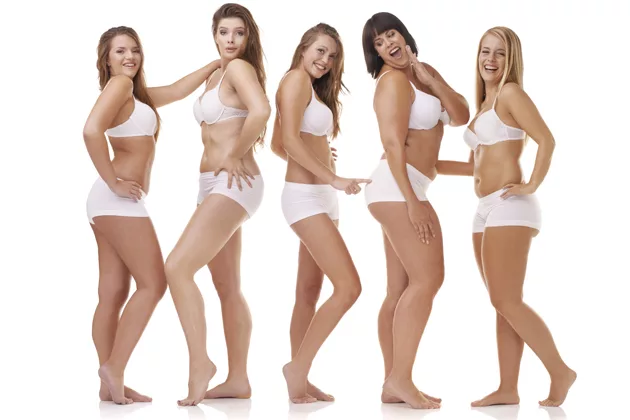
Latest research shows excess weight may gather in certain areas regardless of how much you diet or exercise, as a result of hormone imbalances. Lifestyle, diet and genetics play a part. Human bodies evolved to react to danger by producing the stress hormone cortisol, to trigger the release of energy for the ‘fight or flight’ response. Excess cortisol sparks the release of energy in the form of fat and glucose. This is redeposited as fat round the waist.
Eat little and often to keep blood sugar levels stable, as fluctuations can trigger cortisol release. Eat foods with a low glycemic load, such as apples, wholegrain bread or cashews, which slowly release energy. Too much oestrogen can cause fat to build in the buttocks and thighs. Those fat cells manufacture more oestrogen, and, in turn, more fat is stored. Drinking too much alcohol means the liver can’t clear oestrogen from the blood.
Fat ankles are often the result of fluid retention, which can be caused by a lack of progesterone. Progesterone acts as a diuretic, flushing excess liquid from the body. Bulging calves may be made worse by low levels of human growth hormone, which seems to prompt fat storage in the legs.
Foods rich in vitamin E may boost progesterone. These include sunflower seeds and peanut butter. Reduce sodium intake as this is key in regulating blood pressure and fluid levels, which can help with water retention in the legs and ankles. Avoid processed food such as ready meals. And to boost human growth hormone, get plenty of sleep-HGH is only released at night in adults.
A chubby face, as well as a flabby neck, could be down to too little thyroxine, a hormone produced by the thyroid gland. An underactive thyroid slows the metabolism, which may cause bloating. Another symptom is a swollen neck, called goitre, where the thyroid gland becomes a visible bump. Taking a supplement with selenium, which helps body use thyroxine more efficiently.
Human produces a hormone called DHEA (dehydroepiandrosterone), which is converted into testosterone-DHEA helps build lean muscle mass. When testosterone levels drop too low, muscle mass can be replaced with fat-this is noticeable on the upper arms, which have large muscles.
Women's testosterone levels drop with age, peaking in their 20s, then halving by menopause, but certain foods can help. Consume more protein, such as fish, eggs, tofu and nuts. Zinc, magnesium and vitamin B6 also promote testosterone production.
The rolls that hang over the back of your bra could be because of low levels of human growth hormone (HGH). During the night, women’s pituitary glands release human growth hormone, which stimulates fat cells to release energy to repair the body’s tissues. Too little HGH and fat cells don’t receive the message to convert fat into energy. Studies show adults who lack HGH often have a high level of body fat around the trunk, especially the back.
Melatonin-rich foods, such as raspberries, can increase HGH secretion by up to 157 per cent. Melatonin triggers the release of hormones that tell the body it’s time for sleep. Another study found foods high in the amino acid glutamine, such as yoghurt, can raise HGH production.
haleplushearty.blogspot.com

