Chiklita ad

Showing posts with label Genetic mutations. Show all posts

Friday, 2 February 2018

Common DNA mutation


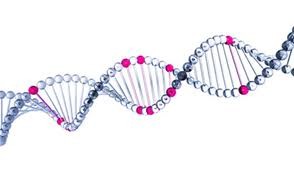
In human DNA, guanine and thymine, are able to change shape in order to form an inconspicuous rung on the helical DNA "ladder." This allows them to survive by avoiding the body's natural defenses against genetic mutations.When these two bases form a hydrogen bond by accident, at first, they don't fit quite right," explained Zucai Suo, professor of chemistry and biochemistry at The Ohio State University and co-corresponding author of the study. They stick out along the DNA helix, so normally it's easy for the enzymes that replicate DNA to detect them and fix them. But once in a while, before they can be detected, they change shape.

The discovery provides a foundation for work on other types of DNA mutations, which are responsible for diseases as well as normal aging and evolution. The four bases of DNA each have their own size and shape, and are supposed to fit together in just the right way. Adenine (A) is always supposed to pair with thymine (T), and cytosine (C) is always supposed to pair with guanine (G). The two "Watson-Crick" base pairs, A-T and C-G, form the DNA sequences of all life.

However, if G were to somehow mispair with T, for example, that would be a mutation. In fact, the G-T mutation is the single most common mutation in human DNA. It occurs about once in every 10,000 to 100,000 base pairs-which doesn't sound like a lot, until its consider that the human genome contains 3 billion base pairs.

Though scientists had long speculated that the G-T mispair shape-shifted in order to resemble a normal G-C or A-T pair, researchers used a form of nuclear magnetic resonance imaging to reveal that these Watson-Crick-like G-T mispairs form in so-called "naked" DNA. Researchers used a DNA polymerase, an enzyme that replicates DNA, to insert a G-T mispair into a DNA strand. By stopping the chemical reaction at different times and analyzing the resulting DNA molecules, they were able to measure how efficiently the polymerase could form the G-T mispair.

Researchers discovered that the G and T bases would pair, but in a misshapen way that stuck out from the DNA helix. Then, in a fraction of a second, the bases would re-arrange their chemical bonds so that they could "snap" into the shape of a normal base pair and fool the polymerase into completing the chemical reaction.

The mutation's survival is a real feat, since it has to overcome a good bit of basic physics. Bases pair in a certain way because of how the protons and electrons in their atoms are arranged. Base pairing requires some amount of energy, and the easiest, most energy-efficient pairs to form are the "right" ones -- A-T and C-G. In effect, the G-T pair has to overcome an energy barrier to form and maintain itself. It turns out that when the G and T bases change shape, they make themselves more energy efficient, less efficient than a normal base pair, but efficient enough.
          haleplushearty.blogspot.com

Friday, 12 January 2018

Links between Crohn's and Parkinson's disease


Mount Sinai Researchers have just discovered that patients in the Ashkenazi Jewish population with Crohn's disease (a chronic inflammatory of the digestive system) are more likely to carry the LRRK2 gene mutation. This gene is the major genetic cause of Parkinson's disease, which is a movement disorder.

Crohn's disease is a complex disorder with multiple genes and environmental factors involved, which disproportionally affects individuals of Ashkenazi Jewish ancestry. The presence of shared LRRK2 mutations in patients with Crohn's disease and Parkinson's disease provides refined insight into disease mechanisms and may have major implications for the treatment of these two seemingly unrelated diseases.

Researchers used international data from the last decade up to the present to analyze the occurrence of some coding genetic mutations in the human genome of many  patients with Crohn's disease and compared them to people without the disorder. They identified mutations in the LRRK2 gene that are more frequently found in Crohn's disease cases as compared to unaffected individuals.

When they discovered a link between Crohn's and the LRRK2 gene mutations they went further to assess the possible genetic link between Crohn's and Parkinson's. The team then looked at a much larger sample of people including patients with Crohn's, Parkinson's, and no disease.

The study found two mutations of the LRRK2 gene in Crohn's disease patients. One of them called the risk mutation was more common in patients with Crohn's, while the other (the protective mutation) was more prevalent in patients without the disease. Most Crohn's disease patients who carried the risk mutation developed the disease on average six years earlier than those who did not carry this mutation.

The research also shows that more Crohn's patients with the risk mutation developed the disease in the small intestine, compared to those without the mutation. If the disease starts in the small intestine, it becomes more difficult to manage and often leads to complications and surgeries.
          haleplushearty.blogspot.com

Monday, 11 December 2017

Genetic mutations start after conception


Hundreds of minor genetic mutations start to form in the cells of an embryo after conception, some of these mutations occur as sex cells are forming in the embryo. That means they can become part of the embryo's genome and be passed on to the next generation.

This opens up a larger perspective on human development,  this shows that some of our genome does not come from our parents.These early genetic mutations are also similar to those found in cancers, cancers can occur as a normal byproduct of cell division, this mat be the causes of neurodevelopmental disorders such as schizophrenia or autism.

These conditions are primarily the result of genetic abnormalities, but no single gene inherited by parents has been found to cause a large number of cases.The study may also help explain why one identical twin might have a genetic disorder while the other is healthy, or why some members of a family who carry a disease-causing mutation do not get sick.
         haleplushearty.blogspot.com

Thursday, 19 October 2017

How ultraviolet rays cause skin cancer


Melanoma is a cancer of skin pigment cells called melanocytes, a fraction of those melanomas come from existing moles. When melanocyte stem cells accumulate a sufficient number of genetic mutations, they can become the cells cancers originate.

Under normal conditions, ultraviolet UV radiation from the sun activates melanocytes to release melanin, a pigment that protects the skin from the sun's rays. But if melanocyte stem cells have surpassed a threshold of genetic mutations, a tumor can start to grow. The skin stem cells can be activated by exposure to sunlight.

Exposure to sunlight triggers mutations that are sufficient for melanoma. A gene known as Hgma2 was suspected to become expressed in the skin under UV radiation. When expressed, Hgma2 facilitates melanocyte stem cells to move from the base of skin hair follicles to the skin's surface-the epidermis, where the cells release melanin.

Researchers used mice engineered with melanocyte stem cell mutations. One set of mice had the mutations, while another set with the mutations had the Hgma2 gene deleted. They then gave the mice a very low dose of UV radiation, just enough to trigger a tanning response. Mice with tumor-causing mutations and the Hgma2 gene intact developed melanomas, but the mice with mutations and the deleted gene remained healthy.
          haleplushearty.blogspot.com

Monday, 9 October 2017

New congenital heart disease gene


 One in every 100 babies is born with congenital heart disease CHD, it is one of the leading cause of mortality from birth defects. Although advancements in surgery and care have improved rates of survival for these infants, CHD patients remain at elevated risk for heart complications, congenital abnormalities and neurodevelopmental deficits later in life.

Some genetic mutations are transmitted from parents to children: researchers identified mutations in FLT4 gene that consistently led to Tetralogy of Fallot, a complex malformation that often presents with cyanosis, or blue baby syndrome. The team found that mutations in the gene encoding myosin, a contractile protein that is highly expressed during development accounted for about 11 percent of Shone syndrome which affects four regions of the left-side of the heart.

The team also reports a shared mutation among some CHD patients with Ashkenazian ancestry. The identical mutation in both gene copies of GDF1 accounted for five percent of severe CHD among children of Ashkenazian descent could have direct clinical implications for assessing risk among people with this ancestry.

Some mutations appear for the first time in a child's genome: the team reports de novo mutations in many genes, but particularly in those that modify chromatin, a complex material that surrounds DNA and that undergoes dynamic changes during development.
These mutations occurred regularly in CHD children with other congenital defects and neurodevelopmental issues.

These same genes have been previously associated with autism, which may be responsible for high rates of neurocognitive issues in some children with CHD. These new findings could be used to expand current genetic testing panels for CHD, to improve both information for parents about the recurrence risks in future children, and the long-term care of the CHD infants.

As many as 400 genes contribute to CHD, sequencing a baby's whole genome may be a better approach than screening for specific mutations. Whole-genome sequencing may be the most effective way to detect genetic variants that cause birth defects and may effect a child's short- and long-term care.
         haleplushearty.blogspot.com

Thursday, 10 August 2017

Niacin prevents birth defects and miscarriage


Taking vitamin B3 supplement could reduce the number of miscarriages and birth defects. Vitamin B3, known as niacin, can correct a nutrient deficiency that can prevent fetus' organs from developing properly.

Niacin also known as vitamin B3 is a water-soluble vitamin that is a part of the coenzymes that assist with energy and metabolism. Niacin is found in marmite, meat, turkey, chicken, peanuts, mushrooms, liver, tuna, green peas, grass-fed beef, sunflower seeds and avocado

Researchers have discovered that some genetic mutations affect the production of the molecule nicotinamide adenine dinucleotide NAD, that is made from vitamin B3. The researchers then gave vitamin B3 to mice embryos with similar NAD deficiencies as those seen in humans.

Vitamin B3 supplement prevents
miscarriages and birth defects in mice, the mice gave birth to healthy and perfect offspring.

Checking NAD levels in a pregnant women will determine whether vitamin B3 supplements is required and this could prevents miscarriage and having a baby with a birth defect.
          haleplushearty.blogspot.com

Monday, 19 June 2017

Facts about cancer


Cancer is a condition where cells in a particular part of the body develop and reproduce uncontrollably. Cells can
experience uncontrolled growth if there are mutations to DNA, and it alters genes involved in cell division.

Cancer occurs when a cell's gene mutations make the cell unable to correct DNA damage. Normal cells in the body follow grow, divide and die.
Cancerous cells can destroy other healthy tissue and organs in the body, cancer can grow in any part of the body.
There are over 220 different types of cancer.

It alters normal cells division to form lumps or masses of tissue known as tumors. Tumors interfere with the digestive, nervous, and circulatory systems, and release hormones that alter proper body functions. Metastasis is multiplication and spread of cancers to other parts of the body to invade and destroy other healthy tissues.

Cancer is considered to be one of the leading causes of morbidity and mortality worldwide. Carcinogens are tobacco, asbestos, arsenic, radiation such as gamma and x-rays, the sun, and compounds in car exhaust fumes are all examples of carcinogens.

 When our bodies are exposed to carcinogens, free radicals are formed that try to steal electrons from other molecules in the body. Theses free radicals damage cells and affect their ability to function normally.

Cancer can be the result of a genetic predisposition that is inherited from family members. It is possible to be born with certain genetic mutations or a fault in a gene that makes one more likely to develop cancer later in life.

African Americans are more likely to die of cancer than people of any other race. Risk of cancer can be reduced by avoiding tobacco, limiting alcohol intake, limiting UV ray exposure from the sun and tanning, eating healthy diet, and regular medical check.

There is an increase in the number of possible cancer-causing mutations in our DNA as we get older. Some viruses like human papillomavirus, hepatitis B and C and E, Human immunodeficiency virus and any disease that suppresses the immune system increases the risk of developing cancer.

There is an increase in the number of possible cancer-causing mutations in our DNA as we get older. Some viruses like human papillomavirus, hepatitis B and C and E, Human immunodeficiency virus and any disease that suppresses the immune system increases the risk of developing cancer.

           haleplushearty.blogspot.com